-2.gif?width=300&height=192&name=New%20Logo%20(1)-2.gif "New Logo (1)-2")
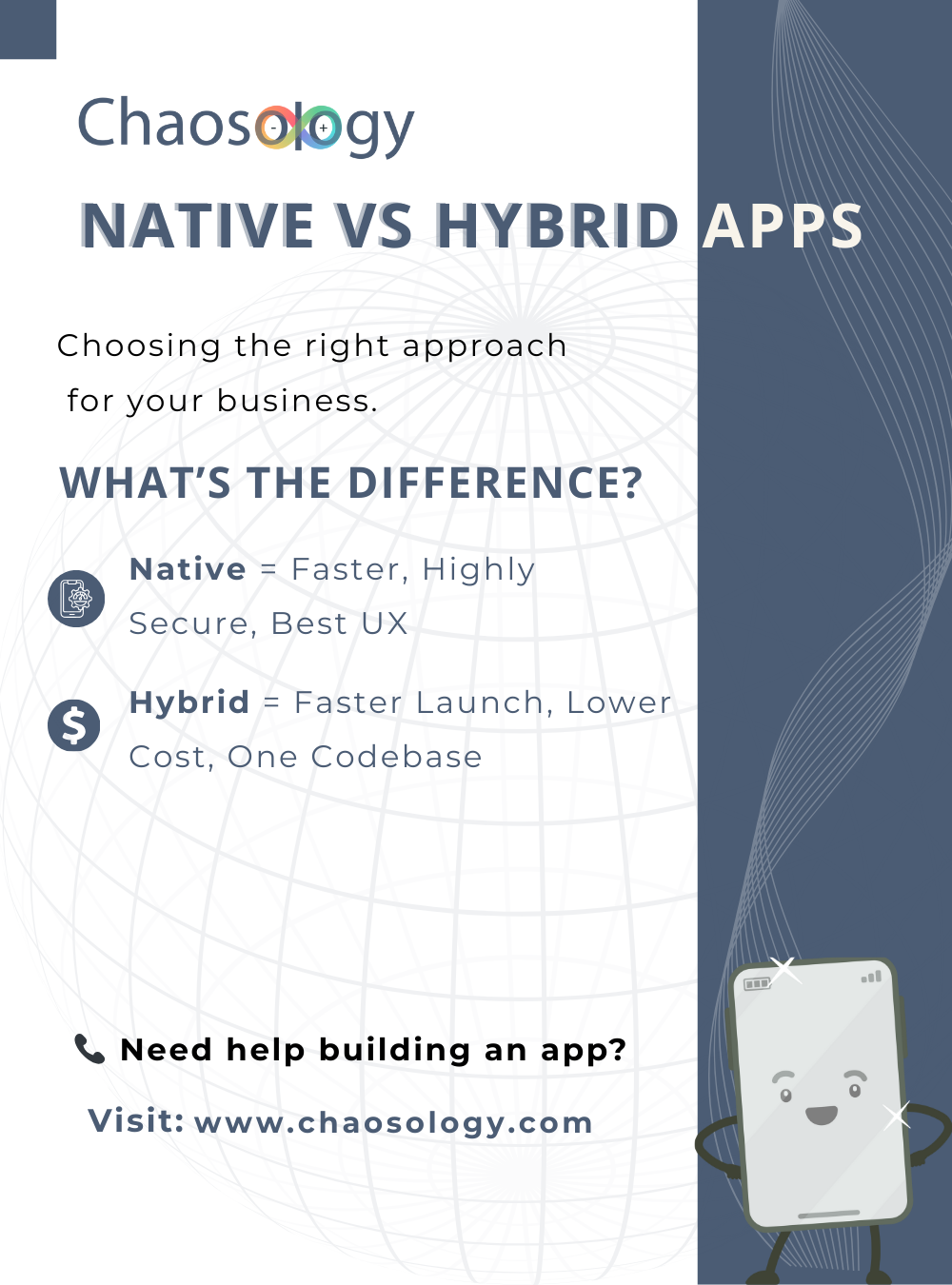
When a business decides to build a mobile application, one of the first and most important decisions is choosing between a native app or a hybrid app, because this choice affects cost, performance, development time, and long-term scalability. As mobile users expect fast loading speed and smooth interactions, companies must choose a development approach that matches their budget and goals, while also ensuring a great user experience.
What Are Native Apps?
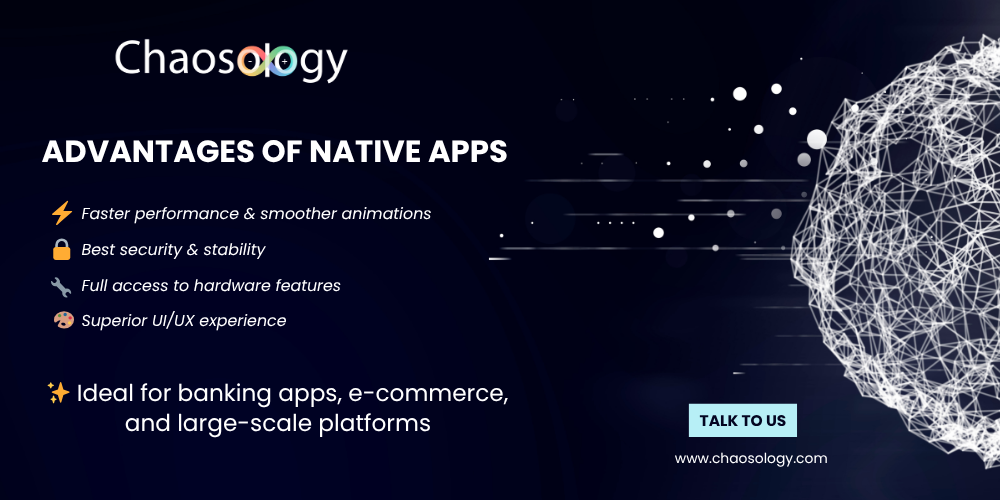
Native apps are built specifically for a single platform, which means developers use Swift or Objective-C for iOS and Kotlin or Java for Android. Since they are written using platform-specific programming languages, these apps can directly access hardware features such as GPS, camera, storage, push notifications, and fingerprint security. Therefore, native apps are known for high performance, smooth animations, and excellent stability, especially in industries where speed and security matter.
For example, banking apps, ride-booking apps, navigation tools, and heavy e-commerce applications usually prefer a native approach because every millisecond of performance and every touch interaction affects user trust and satisfaction.
Advantages of Native Apps
Although native development requires separate codebases for iOS and Android, it provides several strong benefits for businesses:
- Faster performance and smoother transitions
- Better security and stable architecture
- Superior UI/UX design that follows platform guidelines
- Better scaling for large user bases and heavy data processing
- Offline capability and full access to device hardware
Because of these advantages, native apps are generally preferred when a business expects millions of users or wants long-term scalability.
What Are Hybrid Apps?
Hybrid apps allow businesses to build one app that works on both Android and iOS, using web technologies like HTML, CSS, and JavaScript, wrapped inside a mobile framework. Popular hybrid frameworks include Flutter, React Native, Ionic, and Xamarin, which help developers write a single codebase and deploy it across multiple platforms with fewer resources.
As a result, hybrid apps are a great option for startups, small businesses, and MVP (minimum viable product) launches, because they reduce development time, save money, and speed up market entry.
Advantages of Hybrid Apps
Hybrid apps have become extremely popular in recent years because they offer:
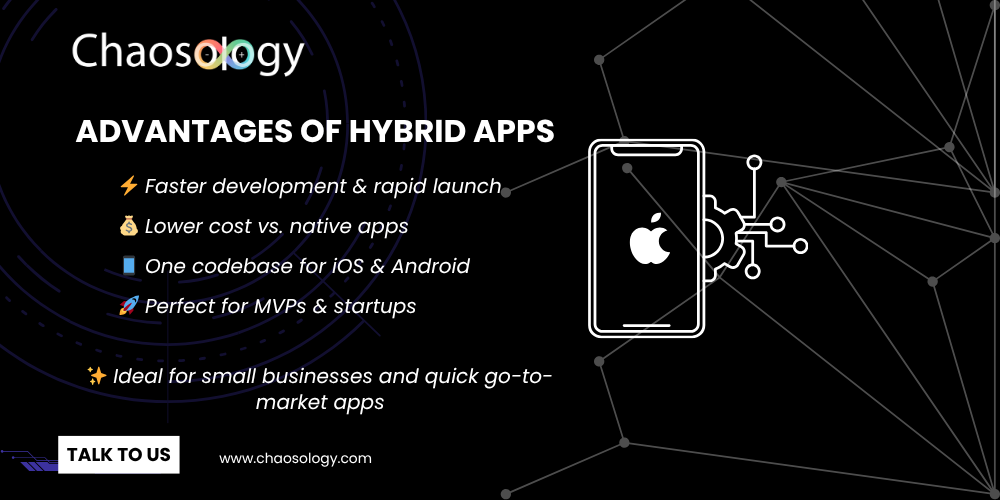
- Faster development with lower cost
- One codebase for both platforms, which reduces maintenance
- Quick updates and easier scaling for new features
- Better time-to-market, ideal for testing ideas and MVPs
- Good performance, especially with modern frameworks like Flutter
Due to these benefits, many companies choose hybrid for early-stage products and switch to native once the user base and revenue grow.
Native vs Hybrid: Key Differences
Although both approaches create mobile apps, they are different in important ways:
|
Feature |
Native App |
Hybrid App |
|
Performance |
Very fast |
Slightly slower |
|
Development Cost |
Higher |
Lower |
|
Time to Build |
Longer |
Faster |
|
Maintenance |
Two separate codebases |
One codebase |
|
UI/UX Quality |
Best quality |
Good quality |
|
Best For |
Banking, e-commerce, gaming |
Startups, simple apps, MVPs |
Which One Should Your Business Choose?
Choose Native If:
- You need top-level performance and smooth animations
- You need advanced hardware access like biometrics or GPS
- You are building a complex or large-scale app
- You want the best possible user experience
Choose Hybrid If:
- You want a fast and affordable launch
- You are building an MVP to test the market
- Your app has basic features and simple screens
- You want both iOS and Android users at once
Final Conclusion
Native and hybrid apps both have strong advantages, and the right choice depends on your business goals, target audience, timeline, and budget. If you want the highest performance, native apps will serve better in the long run. However, if you want to launch quickly and save cost, hybrid apps offer a smart and flexible solution.
Before starting development, it is always helpful to talk to an app expert who can analyze your idea, suggest the right technology, and guide you toward a long-term scalable plan.