-2.gif?width=300&height=192&name=New%20Logo%20(1)-2.gif "New Logo (1)-2")
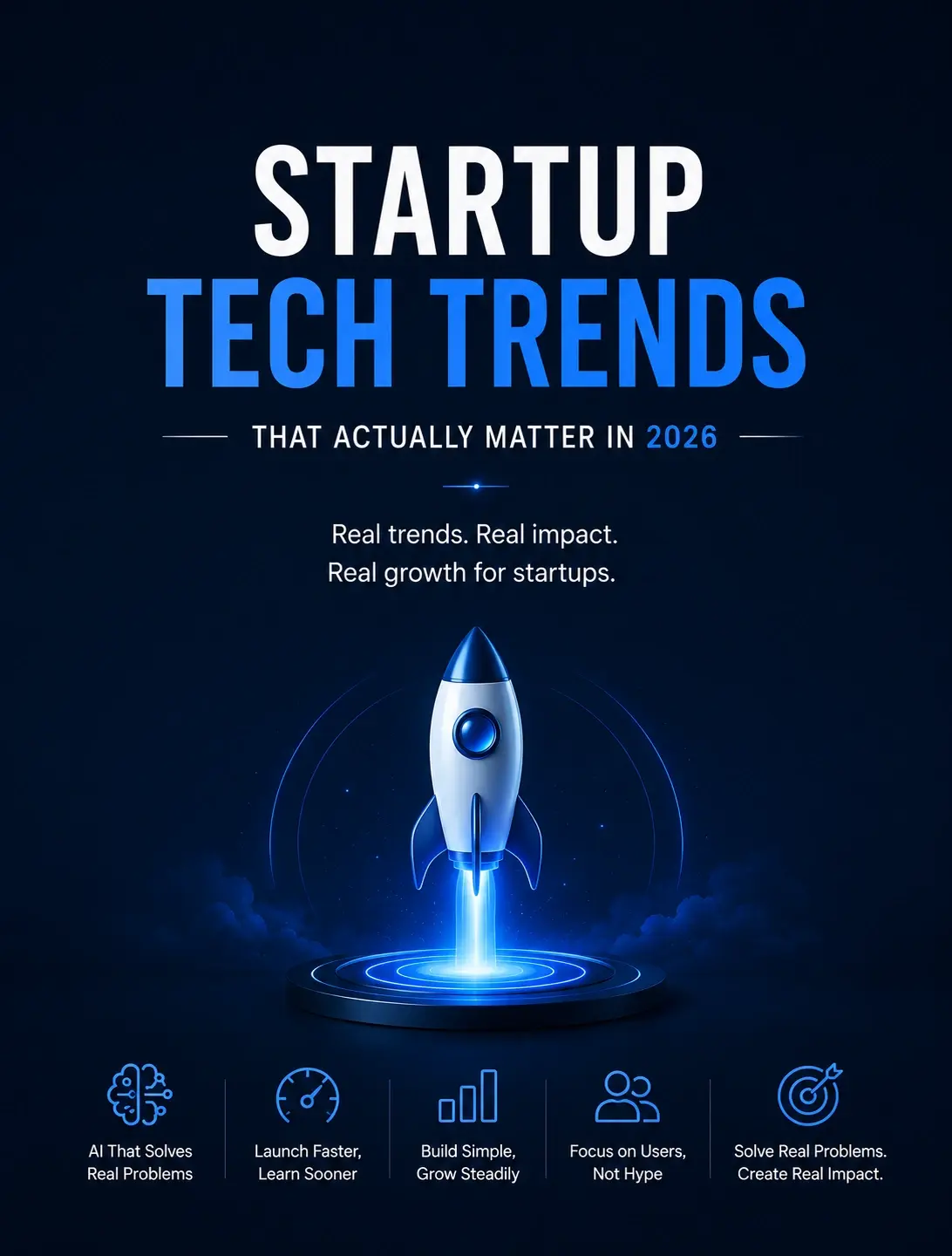
Every year, there’s a new list.
AI this. Web3 that. Something “revolutionary” that’s supposed to change everything overnight.
And if you’re building something—or even just thinking about building something—it starts to feel like you’re already behind.
Like everyone else knows something you don’t.
I’ve been there.
Scrolling through trend reports, saving posts, convincing myself I need to “catch up” before I even start.
But somewhere along the way, something becomes clear:
Not every trend matters.
And most of them won’t matter to you.
The Problem With “Trends”
The way trends are usually presented makes them feel urgent.
Like if you’re not using the latest thing, you’re doing it wrong.
But startups don’t fail because they missed a trend.
They fail because:
- They built something no one needed
- They overcomplicated something simple
- They followed hype instead of solving a real problem
So instead of looking at everything that’s popular, it makes more sense to focus on what’s actually useful.
1. AI That Solves Small, Specific Problems
AI is everywhere right now.
But the startups that are actually winning aren’t building “AI platforms.”
They’re doing something much simpler.
They’re using AI to fix one annoying, specific problem.
Not:
- “We’re building an AI-powered ecosystem”
But:
- “We help you write better emails faster”
- “We summarize your meetings automatically”
- “We remove one repetitive task from your day”
That’s it.
The shift isn’t just using AI
It’s using AI quietly, in the background, where it actually helps
2. MVPs That Launch Faster (and Rougher)
There’s a noticeable change in how products are being built.
They’re not waiting to be perfect anymore.
They’re launching:
- Earlier
- Simpler
- Slightly unfinished
And surprisingly… it works better.
Because instead of guessing what users want, they:
- Launch something small
- Watch how people use it
- Improve based on real behavior
In 2026, speed beats perfection.
%20(8).webp?width=2048&height=1024&name=From%20Chaos%20to%20Clarity%20in%20Business%20Software%20(1000%20x%20500%20px)%20(8).webp)
3. No-Code and Low-Code Are Becoming Normal
A few years ago, no-code tools felt like shortcuts.
Now, they’re just… tools.
Startups are using platforms like:
- Bubble
- Webflow
- Zapier
Not to avoid building something serious, but to:
- Test ideas faster
- Reduce initial costs
- Validate before investing heavily
The goal isn’t to avoid code forever
It’s to avoid wasting time before you know what works
4. Simplicity Is Becoming a Competitive Advantage
There was a time when more features meant a better product.
Now it often means:
- More confusion
- More friction
- More reasons for users to leave
The products that stand out today are the ones that feel:
obvious.
You open them and instantly know what to do.
No learning curve. No guessing.
Startups are starting to realize:
Clarity > complexity
5. Micro-SaaS Is Quietly Growing
Not every startup needs to be the next big platform.
Some of the most sustainable products right now are small, focused tools.
They:
- Solve one problem
- Serve a specific audience
- Stay lean
And they work.
Because instead of trying to be everything for everyone, they become:
really useful for someone specific
6. Users Expect Faster, Smoother Experiences
This one isn’t talked about enough.
But user expectations have changed.
People don’t think:
“This is a new app, let me be patient.”
They think:
“Why is this slow?”
Performance, speed, and smooth interactions aren’t “nice to have” anymore.
They’re expected.
And if your product feels even slightly frustrating?
Users leave.
%20(7).webp?width=2048&height=1024&name=From%20Chaos%20to%20Clarity%20in%20Business%20Software%20(1000%20x%20500%20px)%20(7).webp)
7. Building in Public (Without Overdoing It)
More founders are:
- Sharing their process
- Talking about mistakes
- Showing progress
Not in a “look at me” way.
But in a way that builds:
- Trust
- Early audience
- Real feedback
That said…
The trend isn’t just building in public.
It’s building honestly, without turning everything into content.
So… What Actually Matters?
If you step back, none of these trends are about technology itself.
They’re about:
- Moving faster
- Keeping things simple
- Solving real problems
- Listening to users earlier
The tools have changed.
The mindset has too.
What Doesn’t Matter As Much As It Feels Like It Does
This might be the part no one says out loud.
You don’t need to:
- Use every new tool
- Follow every trend
- Build something “future-proof” from day one
Because trying to do all of that usually leads to one thing:
You don’t start.
What This Really Comes Down To
It’s easy to feel like you’re behind when you look at trends.
Like there’s always something new you should be learning, using, or building with.
But most successful products don’t come from chasing trends.
They come from understanding something simple, and doing it well enough that people keep coming back.
And in the middle of all the noise…
That still hasn’t changed.